
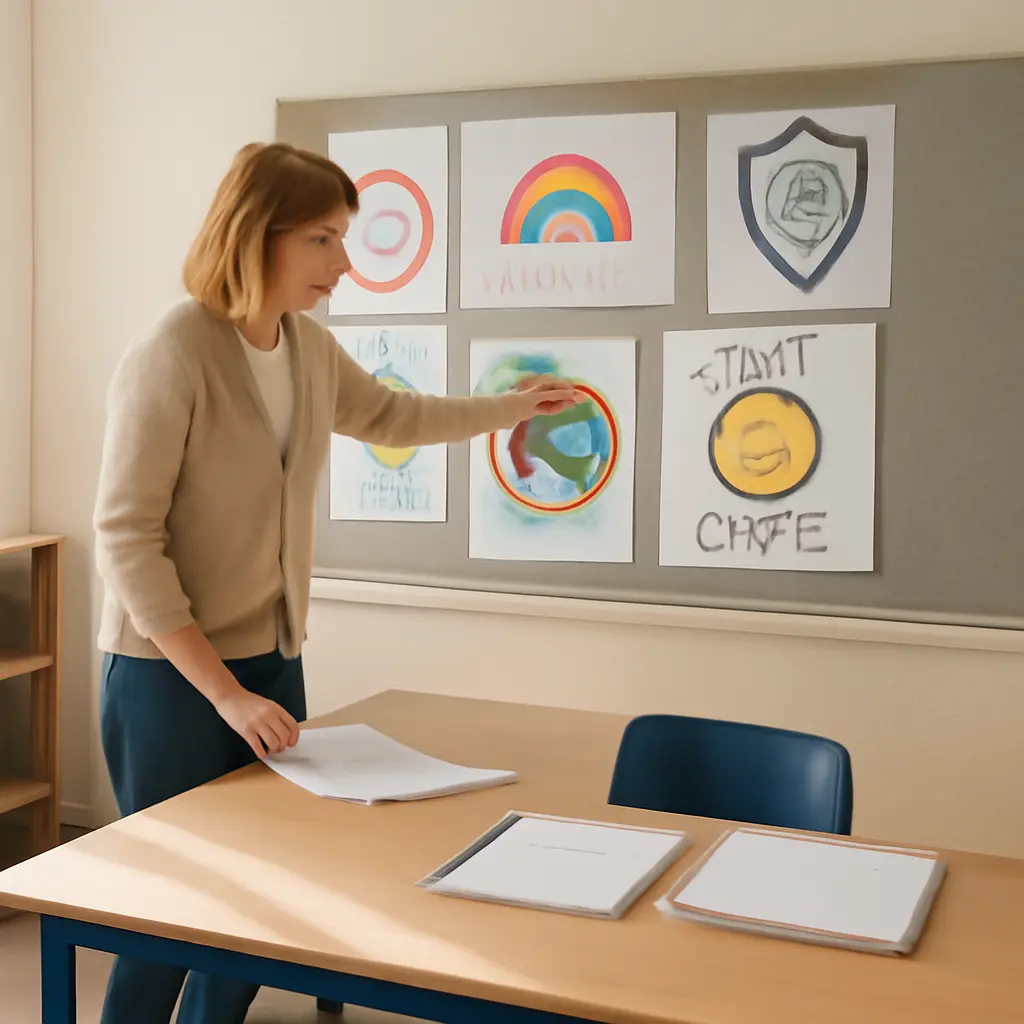
Schools can host meaningful awareness activities by pairing accurate information with student participation, practical skills, and clear routes to support. A school awareness activity is a planned lesson, event, or campaign that helps a community understand an issue and consider constructive action—not simply display a slogan. This month, educators can focus on a locally relevant topic, consult credible sources and affected communities, and assess what students learned. The approach matters: the U.S. Centers for Disease Control and Prevention’s Whole School, Whole Community, Whole Child model treats health and learning as interconnected, while UNESCO’s guidance on global citizenship education emphasizes knowledge, skills, values, and action. Together, these principles point toward activities that are inclusive, evidence-based, and useful beyond a single event.
Meaningful school awareness activities combine learning, participation, and action
“Awareness” can mean knowing that an issue exists, but meaningful school programming goes further: students examine reliable information, understand how the issue affects people, and identify a proportionate next step. UNESCO describes global citizenship education through learning domains that include cognitive, socio-emotional, and behavioral learning. Applied to a school campaign, that means students should learn the facts, consider different experiences respectfully, and practice an appropriate response.
A useful design test is whether an activity answers three questions: What should students understand? What can they do or practice? Where can they find help or further information? For a mental-health awareness lesson, for example, the answers might include recognizing common signs of distress, practicing supportive language, and identifying a trusted adult or school counselor. The activity should not ask students to disclose private experiences publicly.
Choose a focused theme and a measurable learning goal
A theme is the issue the school wants to explore; a learning goal states what students should know or be able to do afterward. “Raise awareness about online safety” is broad. “Students will identify two ways to verify a suspicious message and name an adult they can consult” is specific and assessable. A focused goal helps staff select suitable materials and avoid turning the day into a collection of disconnected posters.
Schools can align a theme with a recognized observance, such as World Mental Health Day on October 10, but should not assume that a calendar date alone makes a campaign relevant. The World Health Organization identifies mental health as an integral part of health, and its guidance underscores the value of prevention and supportive environments. Schools should use current national and local data where available, rather than presenting worldwide figures as if they describe their own students.
Use credible sources and age-appropriate explanations
Students need information that is accurate, understandable, and suited to their age. Teachers can build a short source pack from public health agencies, universities, established nonprofits, or official school and community services. Check the publication date, methodology, and intended audience before repeating a statistic. If a number is not directly relevant to the school community, explain its geographic scope and limitations.
For example, the CDC’s Youth Risk Behavior Survey provides national data on health-related experiences among U.S. high school students, but it should not be treated as a direct estimate for every school or student group. A teacher can use such findings to introduce a subject while making clear that survey results describe populations and patterns, not individual classmates.
Student-centered awareness activities build understanding and practical skills
Student-centered activities give learners a role in exploring an issue rather than making them passive recipients of a presentation. The CDC’s Whole School, Whole Community, Whole Child framework connects classroom learning with school climate, family engagement, health services, and community partnerships. That model supports a range of activity types—from discussion and media analysis to skill practice and service projects—when they are matched to the learning goal.
Facilitated discussions and scenario-based learning
A facilitated discussion helps students examine a question using agreed norms, evidence, and respectful listening. Scenario-based learning gives them a fictional, low-risk situation in which to apply a concept. In a digital citizenship lesson, students might compare two posts and identify signs that one needs verification; in a bystander lesson, they could practice safe ways to seek adult help.
Set boundaries before discussion: participation should not require personal disclosure, students may pass on a question, and staff should explain how they will respond to safety concerns. The National Association of School Psychologists recommends that schools use developmentally appropriate, coordinated approaches to student mental health. For sensitive subjects, teachers should coordinate with counselors or other qualified staff and follow school safeguarding procedures.
Creative campaigns, exhibits, and student media
Posters, podcasts, assemblies, displays, and student-made videos can make a topic visible across a school. They are most useful when students create them from a verified brief, include a specific takeaway, and provide a route to further information or support. A display about healthy relationships, for instance, can pair student-created messages with school-approved guidance on consent, respect, and where to seek help.
Creative work should be accessible and inclusive: provide captions for video, readable text, alternative formats, and translations where needed. Avoid asking students to represent an entire culture, identity, or experience. Invite voluntary contributions and review content for accuracy, privacy, and stereotypes before publication.
Skill-building workshops and community partnerships
A workshop turns information into a skill students can rehearse. Depending on the topic and age group, this might involve identifying a trusted adult, practicing how to report a concern, learning basic first aid from a qualified instructor, or evaluating a claim’s source. Bring in community partners when they offer relevant expertise, but agree in advance on learning objectives, safeguarding expectations, and how questions will be handled.
The CDC’s Whole School, Whole Community, Whole Child framework explicitly includes community involvement and family engagement among its components. A local health department, library, disability organization, or youth-serving nonprofit can help schools make a lesson more practical. Partnerships should complement—not replace—school staff responsibility for student safety and follow-up.
Inclusive planning makes awareness activities safer and more relevant
An inclusive activity recognizes that students may have different abilities, languages, cultural backgrounds, and personal connections to the subject. Relevance comes from listening to the school community, not assuming that one message or format fits everyone. The U.S. Department of Education’s guidance on ensuring equal access to education for English learners and students with disabilities reinforces the need to consider access when planning instruction and participation.
Consult students, families, and people with lived experience
Consultation means seeking input before finalizing the plan and using it to make concrete changes. A brief student survey, a family advisory conversation, or feedback from a relevant community organization can reveal concerns about language, timing, accessibility, or framing. When the topic affects a particular group, invite appropriate expertise without placing the burden of educating everyone on an individual student.
Consultation also improves trust. Explain who is organizing the activity, what information will be shared, whether participation is optional, and how feedback will be used. For activities involving personal or sensitive topics, communicate with families in advance according to school policy and applicable law.
Build accessibility, privacy, and emotional safety into the plan
Accessibility is the practical removal of barriers to taking part. Use clear language, accessible venues, captions, interpretation, flexible response options, and alternatives for students who do not wish to speak publicly. Protect privacy by avoiding public polls about personal health, identity, trauma, or family circumstances. Do not use activities that ask students to reveal private information to demonstrate that a problem exists.
Emotional safety requires a plan for difficult reactions and disclosures. Before an event, identify the staff members available for support, establish referral procedures, and prepare a neutral explanation of confidentiality limits. If a subject could be distressing, offer advance notice and an appropriate alternative activity while preserving access to the learning objective.
Evaluation shows whether school awareness activities made a difference
Evaluation is the process of checking whether an activity reached its intended audience and helped achieve its learning goal. It need not be complicated: compare a short pre- and post-activity knowledge check, ask students which resource they would use, or review participation and accessibility feedback. Attendance alone measures reach, not learning or impact.
Track learning, reach, and next steps
A practical evaluation can track three measures: reach (who had access), learning (what students understood or practiced), and follow-through (whether useful resources or support routes were made clear). Use anonymous feedback when possible, and collect only the information needed to improve the activity. Do not promise that a single assembly will change behavior or solve a complex issue.
For a school display on misinformation, for example, students could complete a brief exercise identifying the source, date, and evidence behind a claim. Teachers can compare responses before and after the lesson, then revise materials if students continue to confuse popularity with reliability. A simple chart can show the proportion of students meeting the learning goal before and after the activity, with sample size and limitations noted.
Turn one-time observances into sustained support
A one-day event can start a conversation, but ongoing practice helps students revisit the message and use available support. Add a follow-up lesson, keep resource information available, and review the activity with student and staff feedback. If evaluation reveals unmet needs, connect the next step to an existing school plan or qualified local service rather than creating a promise the school cannot fulfill.
Conclusion: meaningful awareness activities connect knowledge with care
Meaningful school awareness activities begin with a focused learning goal, rely on credible evidence, and give students a safe way to participate and practice useful skills. Student-centered discussions, creative campaigns, workshops, and community partnerships can make learning tangible when accessibility, privacy, and emotional safety are built into the design. Evaluation then helps schools understand who was reached, what students learned, and what support should continue.
This month, educators can choose one locally relevant theme, consult students and families, verify the facts, and identify a trusted follow-up resource before announcing an event. The broader aim is not simply to mark an awareness date; it is to strengthen a school culture where accurate information, inclusion, and practical support are part of everyday learning.
Sources: UNESCO, Global Citizenship Education: Topics and Learning Objectives, https://unesdoc.unesco.org/ark:/48223/pf0000232993; Centers for Disease Control and Prevention, Whole School, Whole Community, Whole Child (WSCC), https://www.cdc.gov/healthyschools/wscc/index.htm; Centers for Disease Control and Prevention, Youth Risk Behavior Surveillance System (YRBSS), https://www.cdc.gov/yrbs/; World Health Organization, Mental health: strengthening our response, https://www.who.int/news-room/fact-sheets/detail/mental-health-strengthening-our-response; National Association of School Psychologists, Comprehensive School-Based Mental and Behavioral Health Services and School Psychology, https://www.nasponline.org/resources-and-publications/resources-and-podcasts/mental-health; U.S. Department of Education, English Learner Toolkit, https://www2.ed.gov/about/offices/list/oela/english-learner-toolkit/index.html